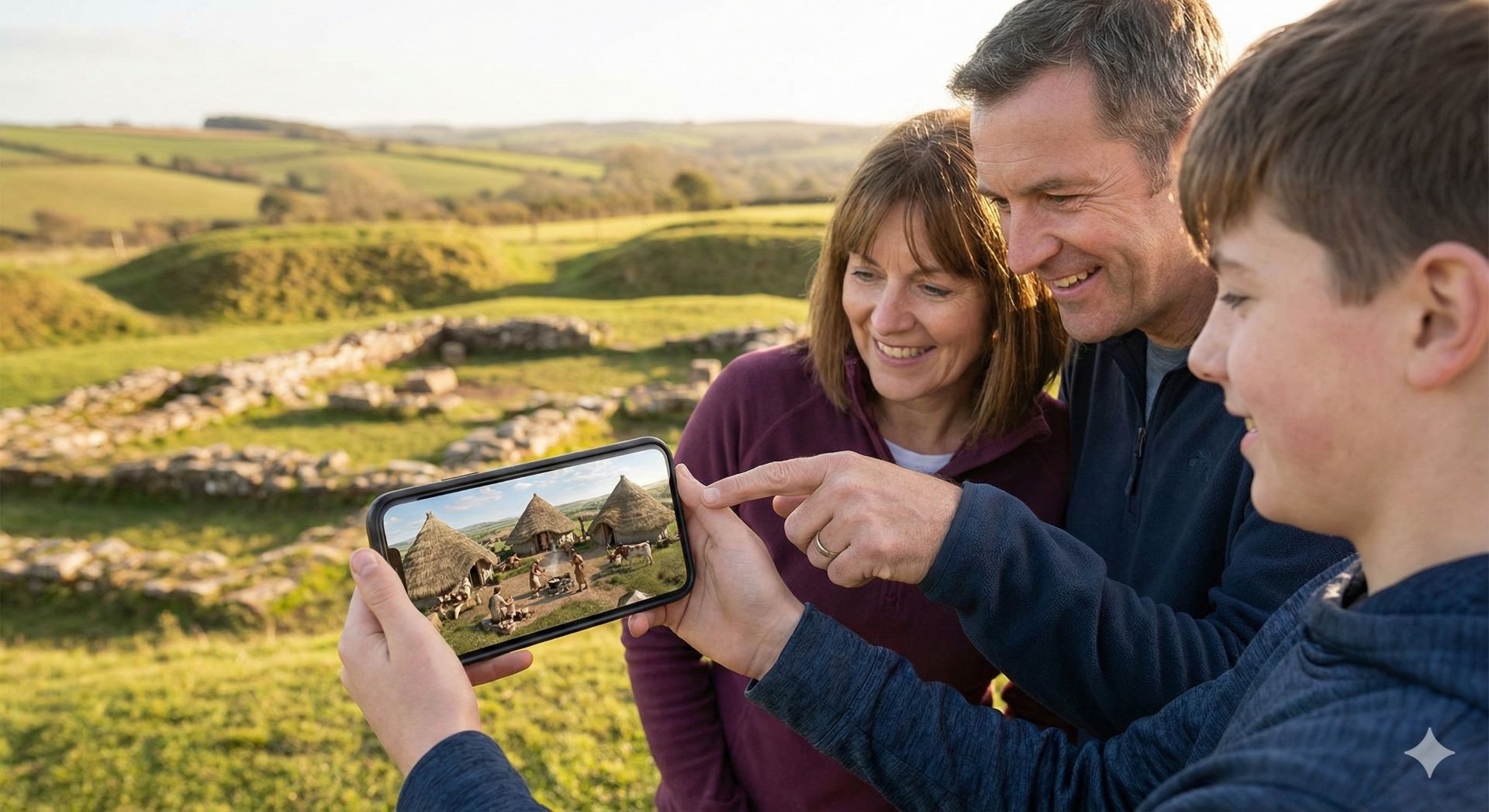
Step inside European history. This project recreates real historical locations as immersive 360° experiences, allowing you to stand in places exactly as they appeared centuries ago. No VR headset required: simply view on your phone, tablet, or computer.
From prehistoric settlements to Iron Age fortifications, classical cities to medieval streets, Renaissance squares to early industrial sites, each scene is tied to a specific location you can still visit today, shown at a particular moment in time.
Each panoramic scene is defined by three elements:
Most locations predate photography, requiring reconstruction from historical sources. We use AI-assisted visualization combined with scholarly research to create these scenes. The project actively seeks input from historians and archaeologists to continually improve accuracy.
These are passive viewing experiences with no interactive devices required. Simply look around and immerse yourself in the past.
On Desktop: Click and drag to look around, use arrow keys or on-screen buttons to navigate between viewpoints.
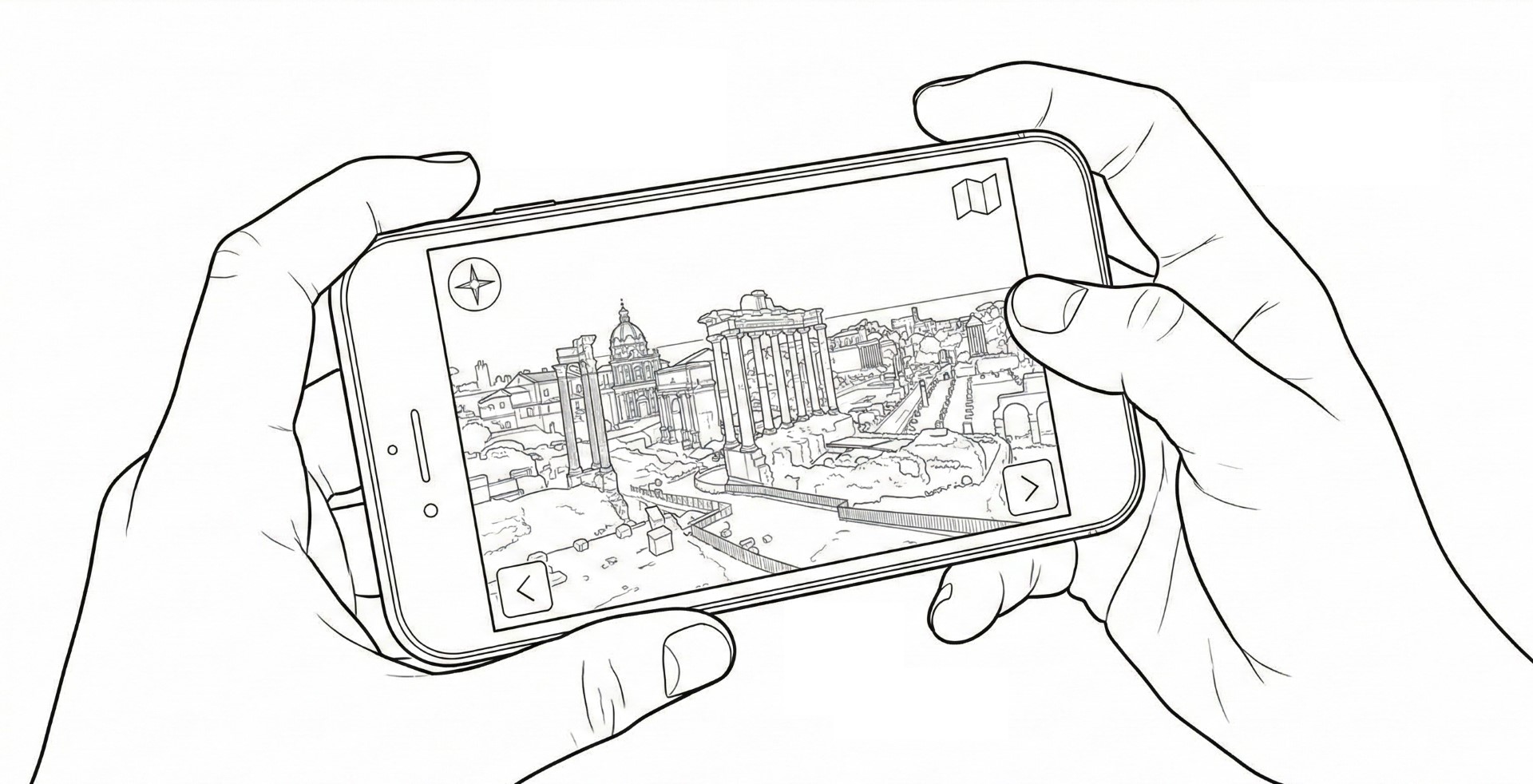
On Mobile: Touch and drag to explore, or enable device orientation to look around by moving your phone. Tap the fullscreen button for an immersive experience.
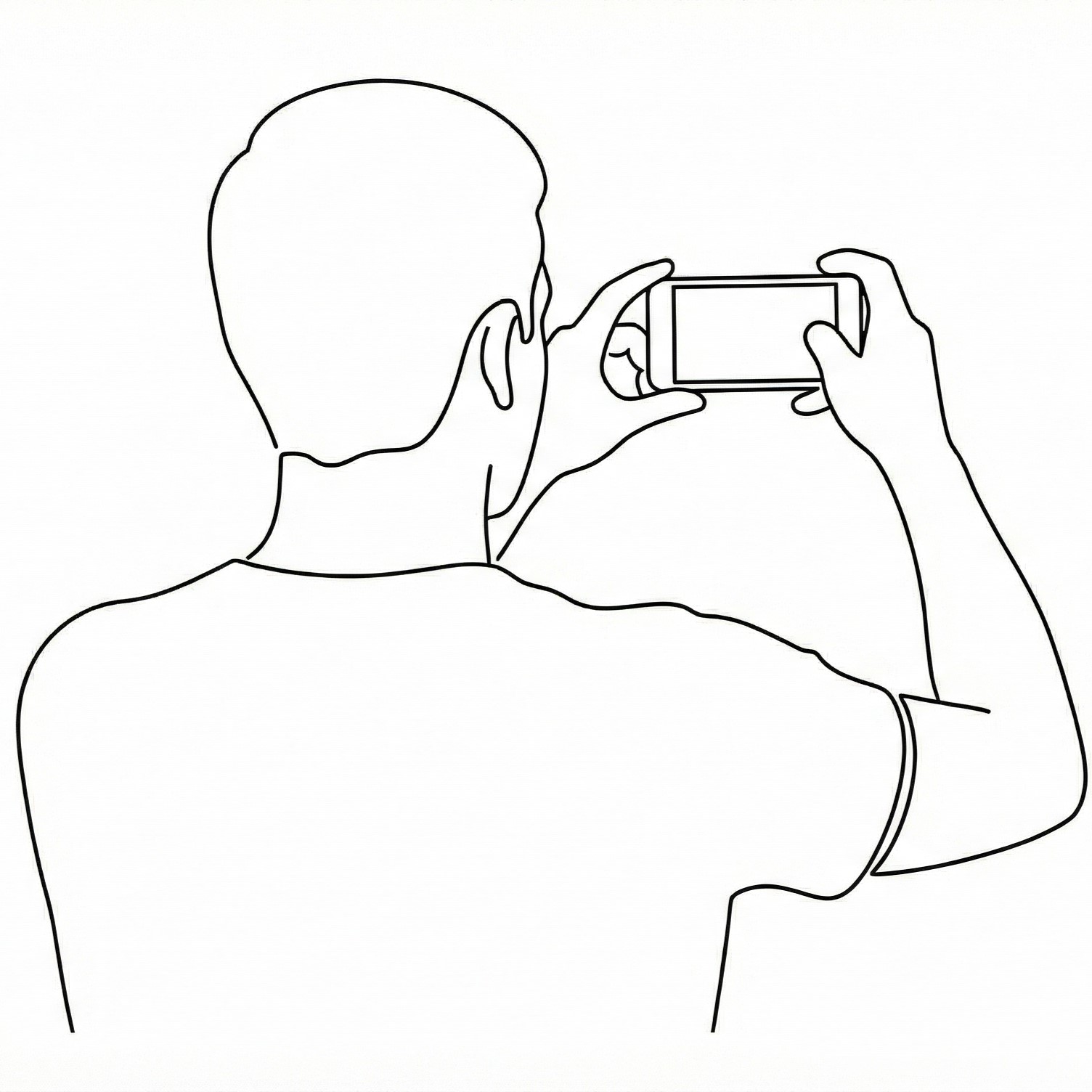
No downloads or special equipment needed: works in any modern web browser.
This is a prototype demonstrating what's possible. Right now, scenes use AI-generated 360° still images as placeholders to test layouts and map different historical eras across Europe.
The finished version will feature short looping video panoramas (30-90 seconds each), showing slow, continuous views of each location in its historical context. This approach keeps the experience brief and immersive without distracting from your physical visit to the actual site.
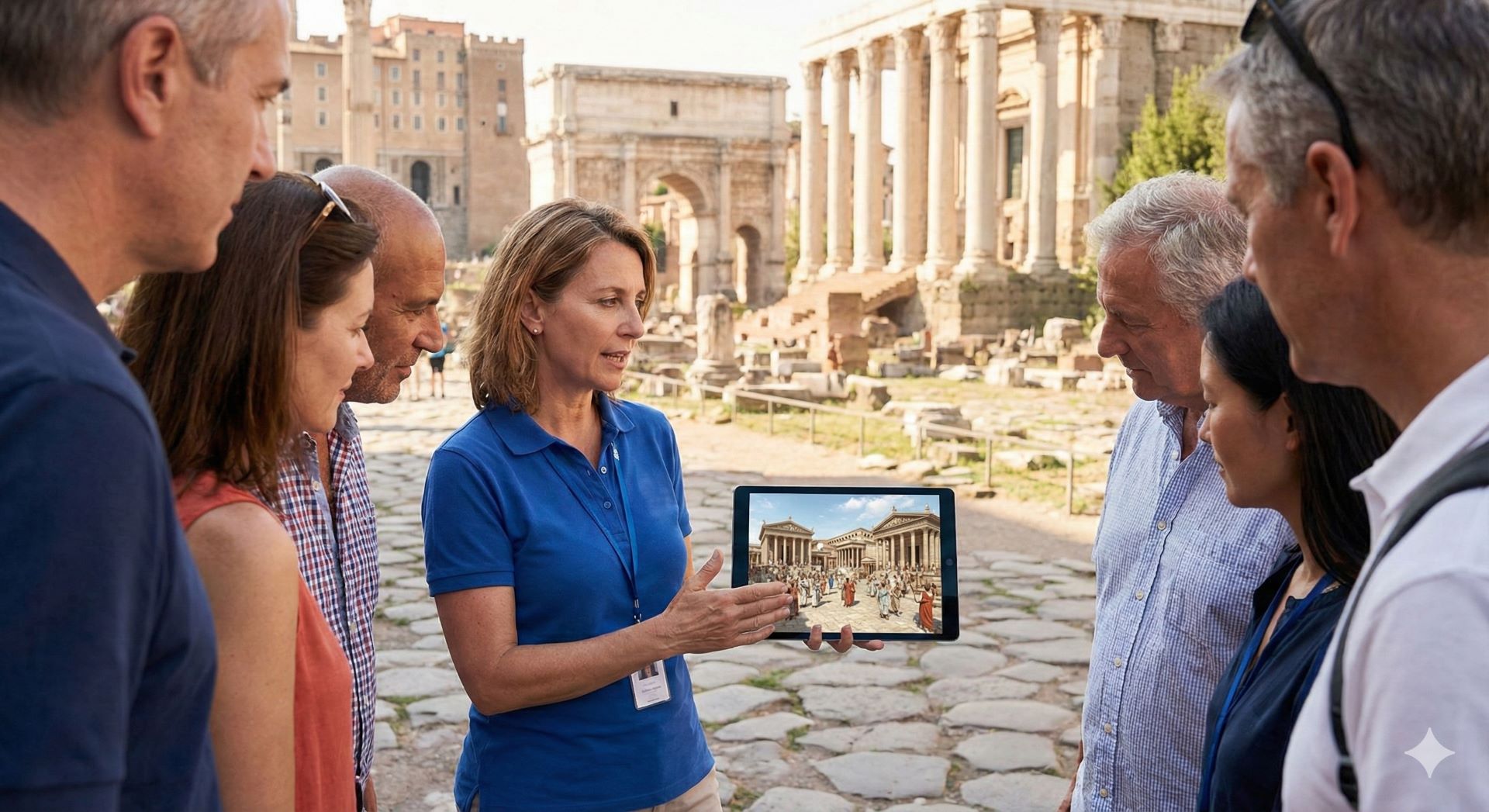
Build a comprehensive collection of accurate historical environments spanning the entirety of Europe across multiple centuries, bringing the past into the present, wherever it happened. When you visit a historical site, you'll be able to visualize what it looked like in its own time.
This prototype serves to demonstrate possibilities, gather feedback, and prepare for full production of these historical reconstructions.
